| ... | ... | @@ -4,7 +4,7 @@ GPIOs are grouped in ports and so each GPIO has an identifier. |
|
|
|
The identifiers have the following format: `PXY`, where `X` is the GPIO port name and `Y` is the pin number.
|
|
|
|
|
|
|
|
## Introduction
|
|
|
|
GPIO ports' registers are mapped to well defined memory addresses. This means that by accessing those addresses, we can access the GPIO registers.
|
|
|
|
GPIO ports' registers are mapped to well defined memory addresses. This means that by accessing those addresses, we directly access the GPIO registers.
|
|
|
|
Then, we can define a structure that represents the memory layout of the GPIO registers:
|
|
|
|
```cpp
|
|
|
|
typedef struct
|
| ... | ... | @@ -171,7 +171,7 @@ These are some pins that are used by default from the kernel when running on _ST |
|
|
|
Extra
|
|
|
|
---------------
|
|
|
|
|
|
|
|
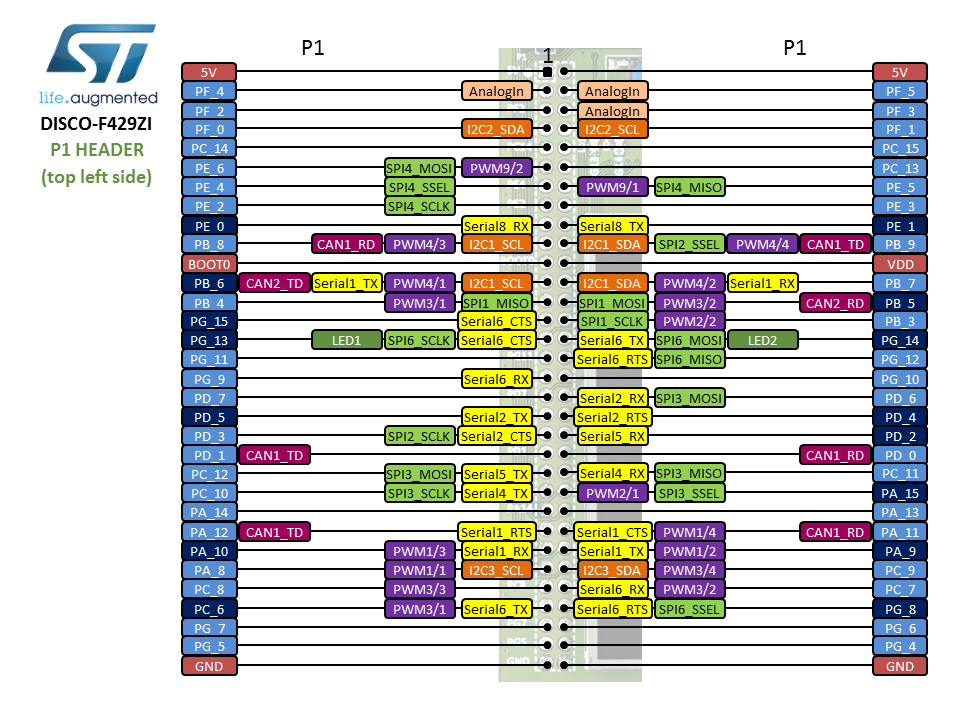
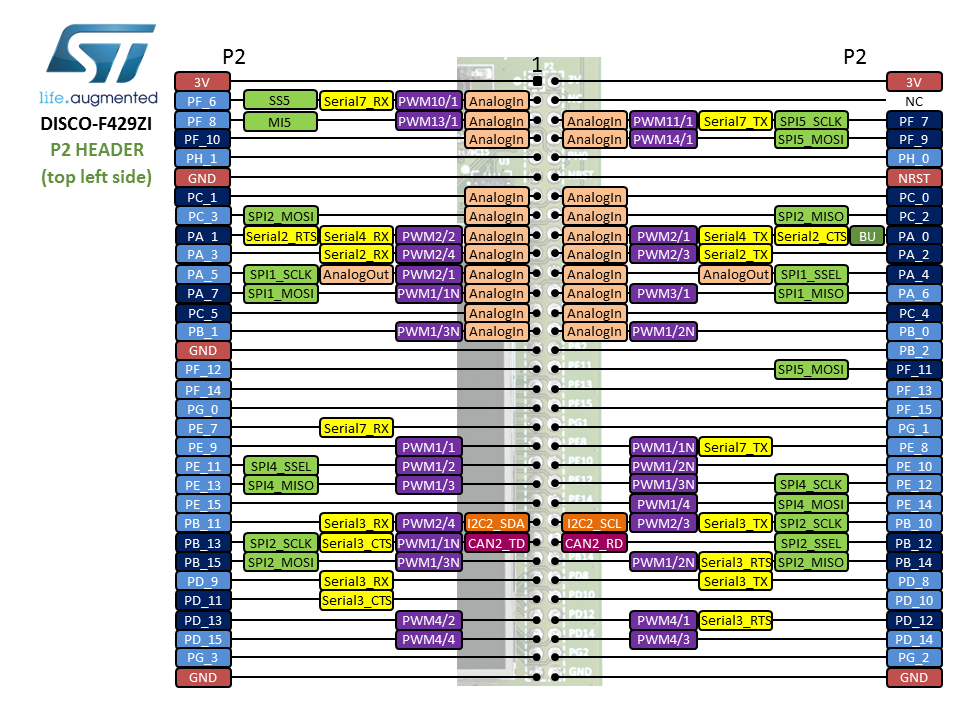
## STM32F429ZI Discovery Pins
|
|
|
|
#### STM32F429ZI Discovery Pins
|
|
|
|
|
|
|
|
|
|
|
|
 |
|
|
\ No newline at end of file |
